Aspen: An Unexpected Ride with Hunter S. Thompson
 |
Theatre Aspen Lobby viewed from John Denver Sanctuary |

Kinda deep for a vacation, right? How could this theme develop when I was surrounded by John Denver's Rocky Mountains, or lapping up the last drips of a summer ice cream?


It is the second floor gallery - that's what got me. As we entered the house, the docent on the front desk that day asked "Do you know about Hunter Thompson?" Without thinking, I said "Yes". How many Hunter Thompsons could there be? It must be the same Hunter Thompson that penned our family motto (see previous post).

 |
| Hunter Thompson |
Spousal Unit was not so quick to claim the man. "Do you mean Hunter S. Thompson?" he asked. She replied, "I mean the Hunter Thompson that ran for sheriff in Pitkin County - the exhibit upstairs is about his campaign." Well, that threw me - perhaps I did not know as much about this man as I should have before I chose his quote as a guiding principle for the last 10 years. It was time to get educated.


Originally sprawling over 22 acres, the Holden Works boasted state-of-the-art technology used to extract silver from low-grade ore. The stoutly built 'sampling' building held large, heavy machinery that pulverized the ore; that building now houses the museum and is the only structure that remains of the original complex.

In the fall of 1893, just 14 months after the new plant opened, the US Congress repealed the Sherman Silver Purchase Act and sent the Holden Works into bankruptcy. The plant fell into disrepair as residents cannibalized the buildings for materials during Aspen's leaner years. Mike Marolt bought the property for $1 in 1940. The Marolts combined it with the Midland Ranch on which they raised sheep and cattle and planted potatoes. By the late 1950s, the family started to sell off parcels. The almighty dollar was stronger than any commitment to continue grazing sheep or raising cattle on this land.
 |
Upper left: examples of the "Devil's Rope" - barbed wire; Upper right: Oliver "Red River Special" Thresher Lower left: barbed wire on the bottom is the most familiar style and is called Glidden's Winner Lower right: Mining frame |

OK, lest this whole post become a bummer, let me talk about redemption. I observed several examples of 'open spaces' that have been generously preserved by the early Aspen families and the community.


Strolling the aspen-lined streets of the town, I was like a bee to the honey with the bountiful flowers - in pots, on fences, in front yards. Even the shops had gardens. Something about growing things, and the desire of the human race to be surrounded by such beauty, helps to restore my faith in humanity. (#1D, Spousal Unit and I were mesmerized by this hummingbird moth.)

We thoroughly enjoyed a performance of Godspell at Theatre Aspen (also attended by my brother and his wife); #1D served as Assistant Stage Manager for the production (thank you, my dear, for bringing back cherished memories of my time on light crew for our high school Godspell run). The lyrics to Light of the World struck a chord with me (pun intended).

You are the light of the world
You are the light of the world
But if that light's under a bushel,
Brrr, it's lost something kind of crucial
You got to stay bright to the light of the world

You are the salt of the earth
You are the salt of the earth
But if that salt has lost its flavor
It ain't got much in its favor
You can't have that fault and be the salt of the earth!

So let your light so shine before men
Let your light so shine
So that they might know some kindness again
We all need help to feel fine (let's have some wine!)

You are the city of God
You are the city of God
But if that city's on a hill
It's kinda hard to hide it well
You've got to stay pretty in the city of God

Let your light so shine
So that they might know some kindness again
We all need help to feel fine (let's have some wine!)

You are the light of the world
You are the light of the world
But the tallest candlestick
Ain't much good without a wick
You've got to live right to be the light of the world
On our last day, we hiked the popular route to the Maroon Bells. Dozens of people completed the 3.8 mile trek out and back - tall, short, runners, walkers, seasoned folks, young'uns, those with boots and those in sandals. Despite our differences, we had a common goal. Isn't that what it should be about? Everything should be about?

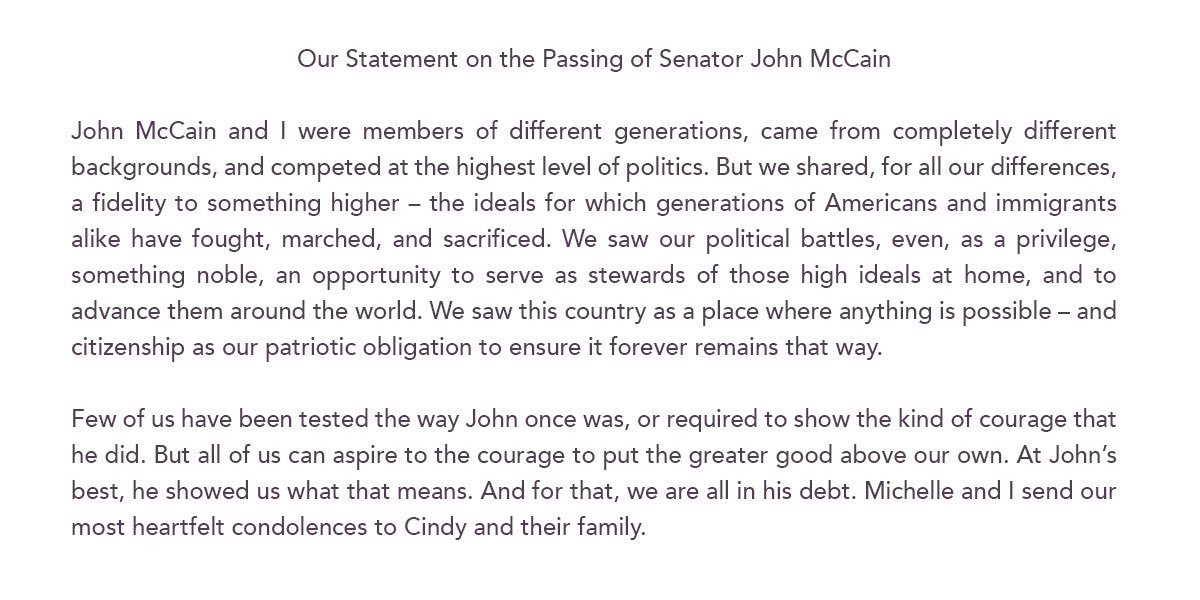
P.S. As I was getting ready to publish this morning, Spousal Unit read me this Barack Obama tweet - it says it all.
Linking to:
All Seasons

Floral Friday Foto

Mosaic Monday

Nature Notes


Saturday's Critters
Sharon's Photo Souvenirs
Wandering Camera

Wednesday Around the World


Comments
Post a Comment